Framer vs WordPress: Which Is Better for Your Business Website?
Framer and WordPress can both power excellent business websites, but they take very different approaches. Here is how they compare and when each platform makes the most sense.
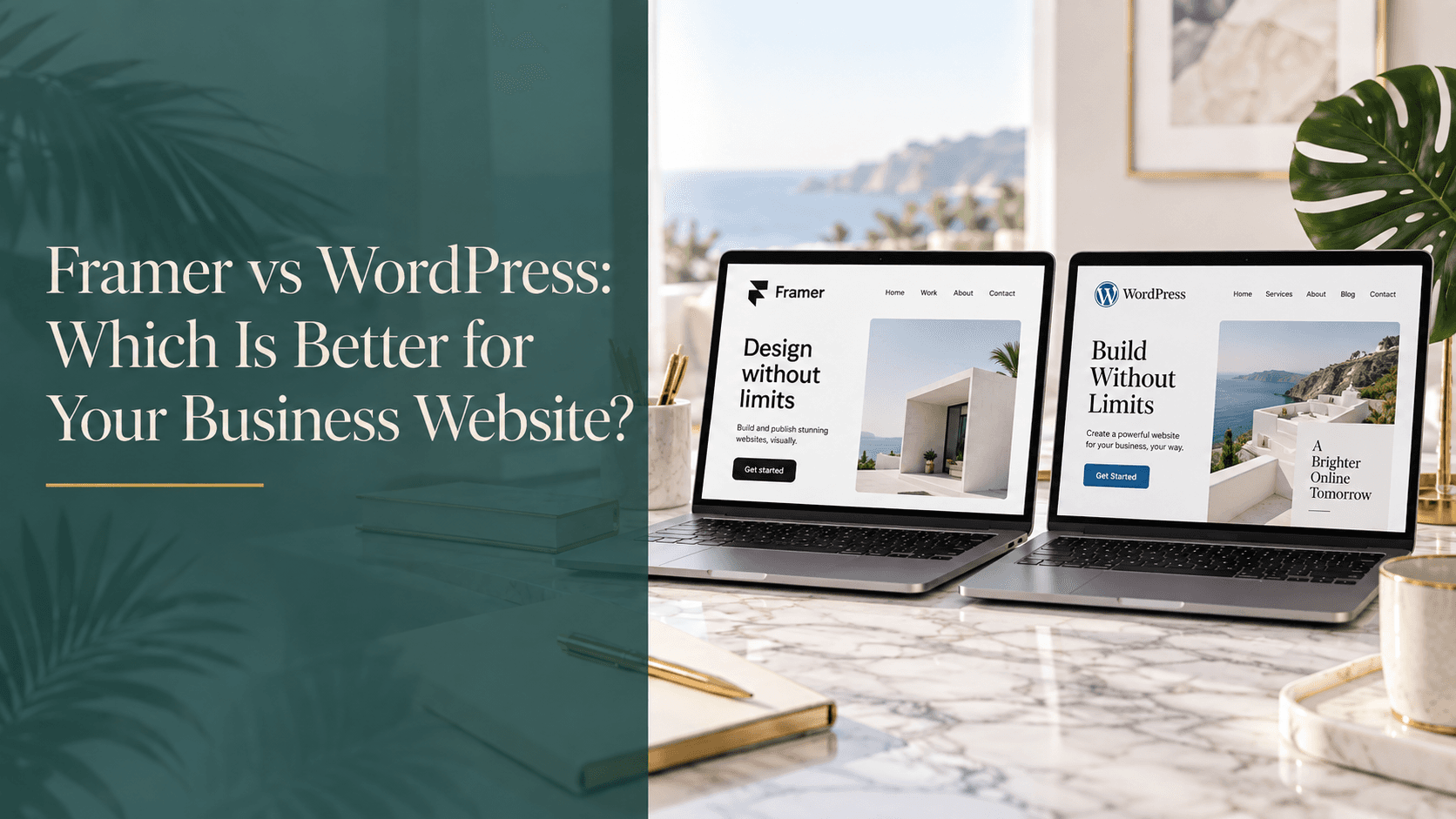
Choosing a website platform is one of the first decisions in a redesign, and two names that increasingly come up are Framer and WordPress. WordPress has been a dominant website platform for years, while Framer offers a newer, design-first approach that is especially attractive for modern marketing websites.
Neither platform is universally better. The right choice depends on what your website needs to do, how you want to manage it and how much ongoing maintenance you are comfortable with.
What Is Framer?
Framer is a visual website platform built around modern design, responsive layouts and an integrated publishing experience. Designers can create highly customized websites without managing a traditional WordPress theme, separate page builder, plugin stack and hosting environment.
For many service businesses, the appeal is simplicity: the design, CMS, hosting and publishing workflow live within one platform.
What Is WordPress?
WordPress is an open-source content management system that can be used for everything from simple blogs to large publishing sites, e-commerce stores and highly customized applications. Its enormous ecosystem of themes and plugins makes it extremely flexible.
That flexibility is also why WordPress projects can vary so much. A site built with a lightweight custom theme is a very different experience from one built with a large page builder and dozens of plugins.
Framer vs WordPress: The Key Differences
Design flexibility
Framer is particularly strong for custom, visually polished marketing websites. Its design environment makes it easier to create refined layouts, interactions and responsive behavior without forcing the design into a traditional theme structure.
WordPress can also be completely custom, but achieving the same result may require a theme framework, page builder or custom development.
Ease of editing
For a business owner who wants to update text, images, blog posts or CMS content, Framer can feel very streamlined once the site has been set up correctly. The interface is visual and there are fewer layers between the content and the published page.
WordPress editing varies by setup. Gutenberg, Divi, Elementor and other builders all behave differently, so ease of use depends heavily on how the site was originally built.
Hosting and technical maintenance
Framer includes managed hosting as part of its platform. You do not need to separately configure a WordPress host, PHP version, database, caching plugin and security stack.
With WordPress, hosting is separate and the site owner or maintenance provider typically needs to manage updates, backups, security and compatibility between themes and plugins.
Plugins and extensibility
This is where WordPress remains exceptionally strong. There are plugins for almost every imaginable function, and developers can build fully custom functionality when needed.
Framer supports integrations, embeds, forms, CMS collections and custom code, but it does not try to replicate the enormous WordPress plugin ecosystem. For a standard service-business website that may be an advantage because there are fewer moving parts. For a highly specialized website, WordPress may offer more flexibility.
Performance
A well-built website on either platform can perform well. Framer removes many of the common performance issues associated with overloaded WordPress sites because it does not rely on a large stack of third-party plugins.
WordPress performance depends on the quality of the hosting, theme, plugins, images and optimization. A carefully developed WordPress site can be fast; a poorly maintained one can become slow over time.
SEO
Both platforms can support strong SEO foundations. The platform itself is only one part of search performance. Site structure, content quality, keyword targeting, internal linking, page speed, authority and ongoing optimization matter far more than choosing a platform based solely on an SEO label.
Framer gives businesses control over essentials such as page titles, meta descriptions, headings, URLs and index settings. WordPress offers extensive SEO tooling through plugins, which can be valuable for more complex publishing workflows.
Blogging and CMS
WordPress began as a publishing platform and remains extremely capable for large or complex content operations. Framer CMS works very well for business blogs, portfolios, case studies, team directories and other structured content, particularly when the editorial needs are straightforward.
When Framer Is the Better Choice
Framer is often a great fit if your primary goal is a modern marketing website; you value custom design and strong visual presentation; you want an easier managed hosting setup; your team needs to make straightforward content updates; and you would prefer fewer plugins and technical dependencies.
When WordPress Is the Better Choice
WordPress may be the stronger option if your site depends on a specific plugin or specialized WordPress integration; you operate a large publishing website; you need highly customized back-end functionality; your internal team is already deeply invested in WordPress; or your technical requirements go beyond what a visual marketing platform is designed to handle.
What About Moving an Existing WordPress Site to Framer?
A redesign is often a good opportunity to reconsider the platform rather than automatically rebuilding on the same one. Existing content can be reorganized, outdated pages can be removed and the new site can be structured around how the business operates today.
The goal should not be to recreate every old WordPress page inside Framer. It should be to keep what is useful, improve what is not working and create a cleaner website going forward.
Which Platform Do We Recommend for Service Businesses?
For most small and mid-sized service businesses that need a high-quality marketing website rather than a complex web application, we increasingly recommend Framer. It gives us the design freedom to create a custom site while keeping the finished website streamlined for the client.
WordPress still has an important place, and there are projects where it is absolutely the right choice. But if your priorities are design, speed of production, managed hosting and a cleaner editing experience, Framer is worth serious consideration.
Related Posts